Introduction
For years, “placements” defined success for most universities. But as industries evolve faster than curricula, it’s clear that a one-time recruitment event can’t replace continuous engagement.
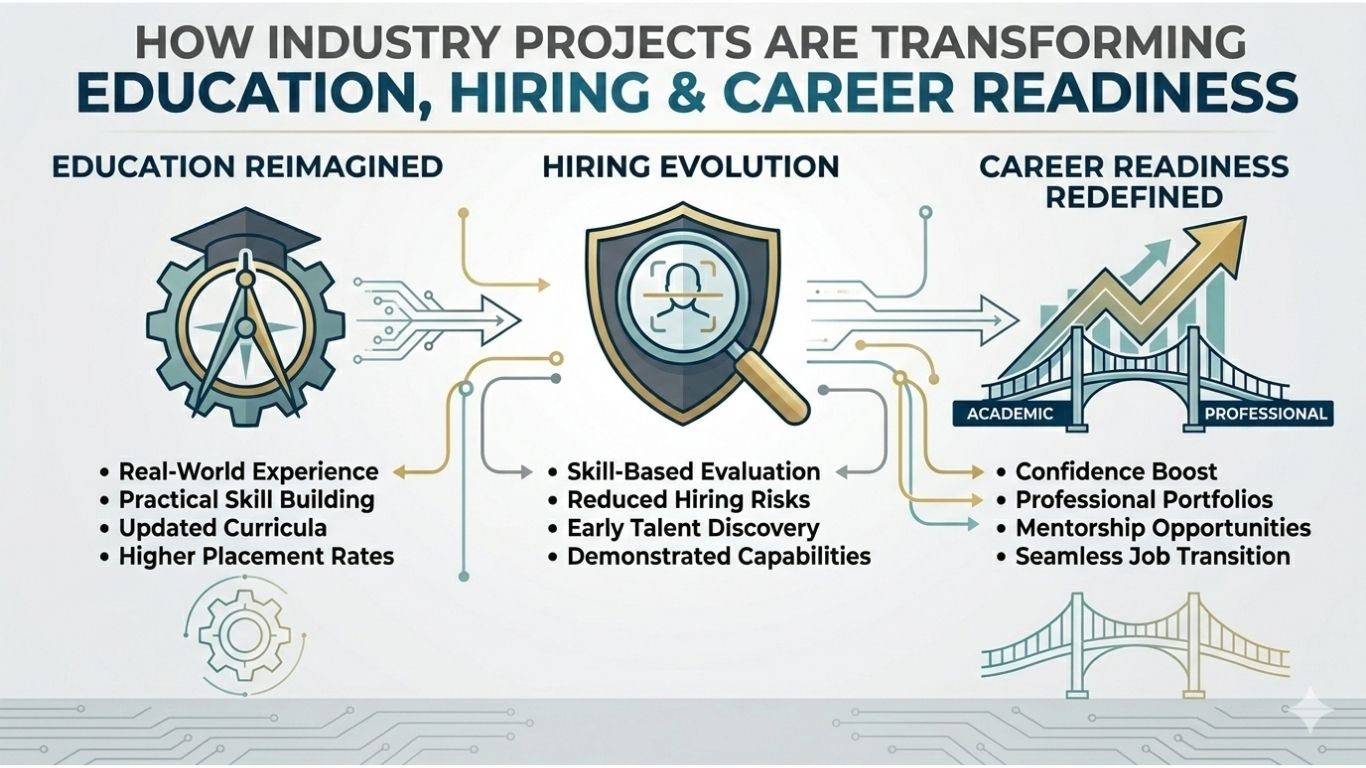
True academic excellence now depends on a university’s ability to maintain ongoing, structured collaboration with employers – enabling students to gain exposure throughout their academic lifecycle.
The Limitation of Placement-Only Models
Placements are transactional – they focus on end results, not the journey. Once hiring season ends, the connection between academia and industry fades.
A sustainable approach involves shifting from placement cycles to partnership models, where industry professionals participate actively in education year-round.
Creating Continuous Collaboration Frameworks
- Industry-Academia Alliances: Create multi-year MoUs with defined objectives like project collaboration, mentorship programs, and curriculum input.
- Alumni as Industry Ambassadors: Engage alumni employed in top firms as mentors or project sponsors.
- Curriculum Co-Design: Include employers in shaping modules to match evolving market needs.
- Digital Collaboration Tools: Use Qollabb to manage, evaluate, and showcase ongoing projects.
How Continuous Collaboration Benefits All Stakeholders
- Students: Gain exposure and mentorship across domains.
- Faculty: Stay updated with real-world practices.
- Employers: Access a steady flow of pre-trained, performance-tested talent.
- Universities: Build an innovation-driven reputation.
The Role of Technology
Digital platforms like Qollabb automate collaboration by connecting universities, employers, and alumni in a single space. Institutions can track engagement levels, project completion, and outcomes without manual intervention – ensuring scalability and transparency.
Conclusion
Collaboration is the new currency of academic relevance. By building a culture of consistent engagement instead of seasonal placements, universities evolve into dynamic ecosystems of innovation and impact – where learning never pauses and partnerships never end.